
3. Examples of Research on Floating Offshore Wind Power in the Graduate School of Frontier Sciences
A Construction Simulator as a Communication Platform for Co-Creation
Ryota Wada
Professor
Department of Ocean Technology, Policy, and Environment
(Special Feature Supervisor)

Japan plans to deploy hundreds to thousands of large floating offshore wind turbines far out at sea, away from the coast. To achieve this, it is necessary not only to establish methods for manufacturing and procuring key components such as wind turbines, nacelles, floating platforms, mooring lines, and submarine power transmission cables, but also to build a comprehensive supply chain for these components including offshore assembly and installation of these components, together with their long-term operation and maintenance.
“The first step is to determine what kinds of work vessels are required and how they will be operated from ports. Without a certain level of clarity on these points, it is not possible to implement demonstration projects or to realize the supply chain.”
This was explained by Professor Ryota Wada, a specialist in marine industrial systems. For about two years, Professor Wada has been analyzing data on vessel operations and weather conditions in Europe, where offshore wind power projects are more advanced. Building on this work, he has developed a construction simulator that can reproduce the complex behavior of work vessels and predict construction schedules under the meteorological conditions found in the waters surrounding Japan.
“The simulator is merely a tool. What we aim to create is a communication platform through which experts from various fields involved in the floating offshore wind industry can exchange and discuss ideas. For example, parallel operations may be an effective way to shorten construction periods. However, stakeholders must evaluate the trade-off between the increased project management complexity created by overlapping phases and the resulting gains in operational efficiency.”
A Japanese model for floating offshore wind power can only be realized through the collaborative efforts of many stakeholders. Professor Ryota Wada’s research is expected to form one of the foundations for this.
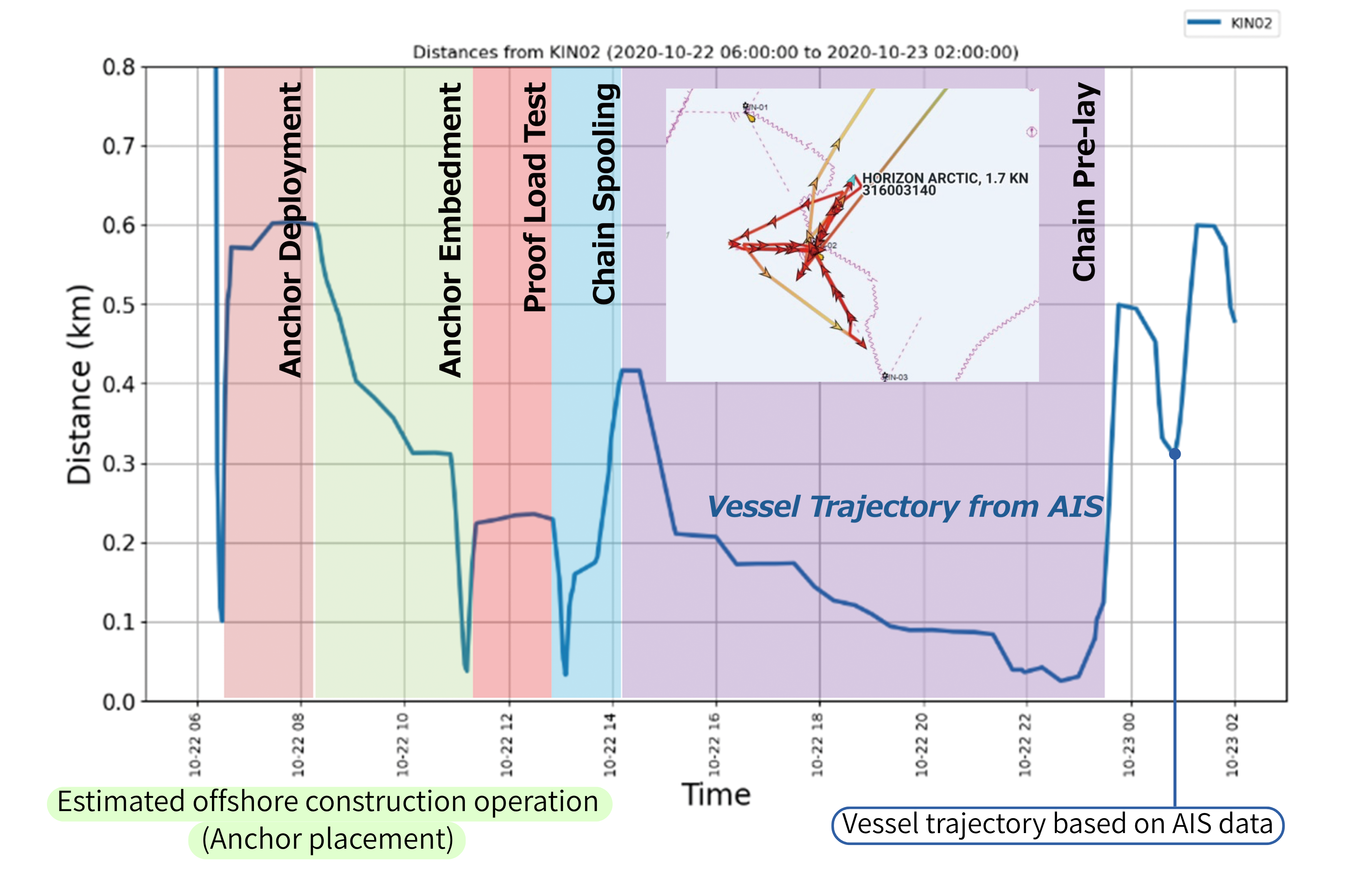 By analyzing vessel position data (AIS), it is possible to estimate the relevant offshore construction operations and determine the required time.
Contributing to Scientific Discussions through Simulation of Artificial Reef Effects
Shigeru Tabeta
Professor
Department of Environmental Systems
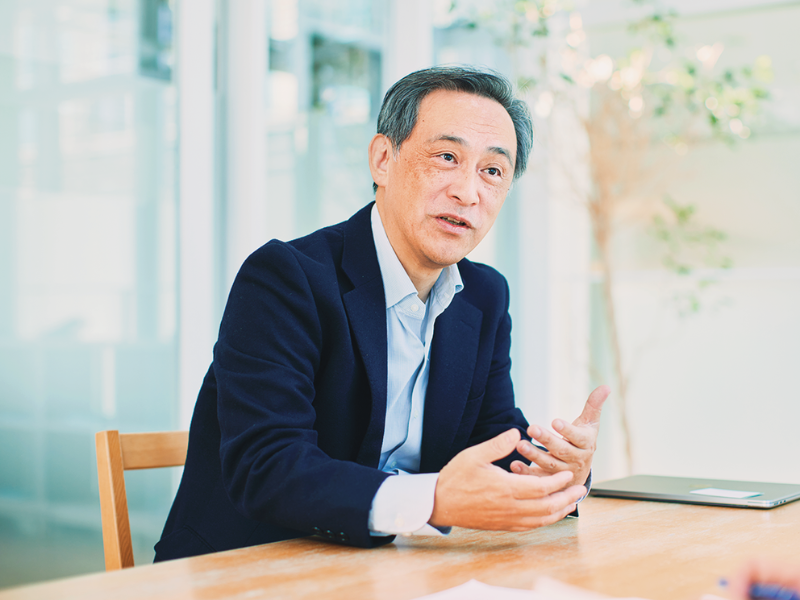
Professor Shigeru Tabeta specializes in marine systems science. Guided by the principle of systematically analyzing the interactions between the natural environment and society, he conducts research primarily in coastal areas through a combination of field observations, surveys, numerical modeling, and simulation. He has developed tools such as a fishery simulator that combines a resource dynamics model and a catch model to support sustainable coastal fisheries. For about three years, he has also been involved in research on offshore wind power.
“Specifically, he aims to contribute to the scientific discussion by simulating the predicted effects of wind turbine installation on fisheries, particularly the so-called artificial reef effect. The artificial reef effect refers to the phenomenon in which marine organisms attach to underwater structures, providing food sources and shelter for small fish, thereby attracting fish to the vicinity of the structure. However, it is difficult to determine whether fish are merely aggregating around the structure or whether the overall fish population in the broader marine area is actually increasing. Moreover, it is necessary to consider the balance of the entire marine ecosystem.”
During field surveys, data are collected using instruments such as acoustic sonar installed on structures. Recently, his laboratory has been developing monitoring systems that integrate sonar with optical cameras. In the future, it may become possible to utilize data from sensors installed on offshore wind turbines and related infrastructure.
“Currently, we are focusing on relatively localized areas around individual structures, but in the future, we hope to expand our analysis to larger-scale regions, such as entire wind farms consisting of multiple turbines.”
For offshore wind power to become widespread, it is necessary to evaluate its impacts on fisheries and surrounding environments from multiple perspectives and to build social consensus. This research represents an example of the expanding scope of studies within the collaborative research framework.

Behavioral trajectories of fish near an offshore structure captured using an acoustic video camera
4. Messages to UT-FloWIND
Messages have been received from both domestic and international sources regarding the “International Collaborative Research Organization for Floating Offshore Wind Energy and Related Technologies (UT-FloWIND),” which is dedicated to advancing floating offshore wind energy across the entire university.
Expectations for a Comprehensive Platform Promoting R&D, Human Resource Development, and International Collaboration in the Field of Floating Offshore Wind Power

Masakatsu Terazaki
Chairman
Floating Offshore Wind Technology Research Association
Although Japan has limited land area, it possesses the world’s sixth-largest maritime area. Offshore wind power is therefore seen as an important renewable energy source with significant potential to support the transition to a decarbonized society. In particular, floating offshore wind power systems are expected to overcome Japan’s geographical constraints, such as limited shallow coastal areas, and to enable stable and large-scale power generation, thereby contributing to improved energy self-sufficiency in the country.
At the same time, floating offshore wind power systems pose a wide range of challenges because of their unique characteristics, including their dynamic structures, offshore deployment, and exposure to harsh environmental conditions. These challenges extend beyond technical and manufacturing issues to include legal frameworks, as well as port and maritime infrastructure.
In response to these challenges, FLOWRA was established as a forum through which industry stakeholders can collaborate to accelerate the deployment of floating offshore wind power systems. Working together with manufacturers and research institutions, FLOWRA is advancing the development of shared foundational technologies, including floating structure design models, production technologies, and mooring and power transmission systems for deep-water environments. At the same time, the organization is strengthening cooperation with leading European countries in areas such as research and development, information sharing, and standardization, while also promoting policy proposals and fostering public understanding to accelerate societal implementation of floating offshore wind power and enhance Japan’s international presence.
It is expected that the newly established “International Collaborative Research Organization for Floating Offshore Wind Energy and Related Technologies” (UT-FloWIND) at The University of Tokyo will serve as a comprehensive platform that integrates interdisciplinary knowledge and international networks, advancing research and development of floating technologies, human resource development, and the global dissemination of knowledge originating from Japan, while promoting international collaboration.
Floating offshore wind power is not only central to Japan’s decarbonization and energy transition efforts, but also has significant potential to drive industrial and regional development, making it a strategic resource for building a sustainable socio-economic system. It is our sincere hope that the efforts of UT-FloWIND and FLOWRA will be a catalyst for opening up this future.
Message for the New Association – UT-FloWIND

Kazuo Nishimoto
Professor
University of São Paulo, Brazil
Congratulations on the establishment of this new association! As we celebrate its inauguration, it is also important to recognize the magnitude and complexity of the challenges that lie ahead. The association now assumes the responsibility of enabling the development of an offshore wind industry whose technological evolution will resemble that of other complex engineered systems, such as offshore oil and gas and aerospace.
Among the many challenges, several strategic priorities stand out. These include the integration of multidisciplinary capabilities covering naval architecture, offshore engineering, marine operations, digital systems, and safety engineering; the development and training of a new generation of engineers and technical specialists capable of supporting the entire offshore wind value chain; and the incorporation of advanced, competitive, and disruptive technologies that enhance technical performance and improve economic feasibility compared to other energy sources.
Historically, Japan became a global reference in shipbuilding during the post-war industrialization process. Its methodologies were later adopted and further refined by countries such as South Korea and China, supported by advantageous cost structures that accelerated the growth of their shipbuilding industries.
By contrast, the offshore engineering sector—originating in the North Sea and the Gulf of Mexico—evolved with characteristics markedly different from traditional shipbuilding, despite certain common foundations. As an example, Brazil currently operates large-scale oil and gas production systems in ultra-deep waters exceeding 2,000 meters, relying on technologies capable of producing more than 200,000 barrels per day per production unit.
Today, however, global attention is focused on sustainable energy systems that eliminate greenhouse gas emissions derived from fossil fuels. This includes the development of new marine energy technologies that harness renewable resources at sea.
Within this broader decarbonization landscape, offshore wind power has emerged as one of the most mature and promising near-term solutions, enabling large-scale energy capture in offshore. Numerous global initiatives are advancing rapidly, driving the emergence of a new industrial ecosystem for offshore renewable energy.
Despite this momentum, significant technological and operational gaps remain. Building a fully feasible offshore wind energy system—covering construction, installation, operations, maintenance, repair, and decommissioning—requires the integration of multiple engineering and scientific disciplines, including digitalization, new materials, advanced sensors for comprehensive monitoring, and enhanced safety systems. Only through such integration and collaboration will the sector achieve a technically robust and economically competitive industrial model.
Both established companies and emerging technology developers will play essential roles in this transformation, contributing innovations capable of scaling and sustaining a new ocean energy industry.
Just as the establishment of OTIC – Offshore Technologies Innovation Centre - in São Paulo, Brazil, aims to develop technologies that enable the decarbonization and digitalization of oil and gas production systems—bringing together diverse engineering and scientific disciplines— UT-FloWIND has the potential to become an association or center that fosters new knowledge and disruptive technologies for wind energy production at sea.
For these reasons, I view this initiative with great optimism and enthusiasm, and I congratulate its visionary direction. By supporting the growth of a new offshore wind industrial base, it can significantly accelerate global decarbonization and contribute meaningfully to the transition toward a sustainable energy future.
Conclusion
The transition from fossil energy to renewable energy is an irreversible global trend. The potential and impact of offshore wind power generation are particularly great, and in Japan, which is surrounded by the sea on all sides, the “floating type” technology is key. UT-FloWIND is expected to play a central role in Japan’s nationwide efforts to achieve carbon neutrality, foster new industries, and strengthen energy security.
Reporting, editing, and writing by Kazutada Furui