
Broader Perspectives through Diverse Interactions

Haruka Sezutsu
Master's Course Student at the Department of Environment Systems
During my undergraduate studies in the Faculty of Engineering, I focused on chemistry as a foundation to learn about the knowledge and technologies addressing various challenges in fields such as the environment, energy, and medicine. Through this experience, I developed a strong interest in environmental studies, which significantly impact not only our present lives but also our future. Desiring to acquire broad knowledge, multifaceted perspectives, and problem-solving capabilities regarding increasingly severe global environmental issues, I decided to pursue my studies at the Department of Environment Systems in GSFS.
Currently, with the aim of achieving eco-friendly organic synthesis, I am conducting research on reactions that remove oxygen from biomass-derived raw materials. By utilizing supercritical water—whose properties change significantly depending on temperature and pressure—instead of organic solvents, we can expect to reduce environmental impact and improve reaction controllability. I hope to continue pursuing reaction fields that contribute to the realization of green chemistry.
GSFS is an environment where individuals from diverse nationalities and backgrounds gather with high enthusiasm. While deeply pursuing your own specialization, you can naturally encounter insights from other fields, allowing you to cultivate a broad perspective that transcends boundaries and flexible thinking skills. I look forward to the day when I can dedicate myself to research and engage in discussions alongside all of you.
Driven by "Engineering to Support People": Expanding My Expertise from Healthcare to Infrastructure

Aki Takamura
Master's Course Student at the Department of Human and Engineered Environmental Studies
As an undergraduate in Precision Engineering, I conducted research at the Real World Robot Informatics Lab in the Department of Human and Engineered Environmental Studies. Focusing on balance disorders in Parkinson's disease, I took an interdisciplinary approach—integrating engineering, medicine, and psychology—to explore effective rehabilitation. My goal to "support human activities through engineering" perfectly aligned with the department's vision. Having experienced its ideal environment for immersive research, I naturally chose to pursue my master's degree here.
To broaden my expertise, I shifted my focus from healthcare to infrastructure maintenance, researching the automation of concrete hammering test diagnostics using machine learning. With aging infrastructure and a shortage of inspectors, efficient technologies are urgently needed. I aim to establish a practical system while addressing challenges like data preparation costs and the "class imbalance" caused by extremely rare defect sounds. Although my research target shifted from people to objects, my core mission to solve social issues and support human lives remains unwavering. Exploring diverse topics at GSFS has greatly enriched my academic journey.
The appeal of GSFS is its calm environment for deep research combined with a highly international atmosphere. Inspired by daily interactions and international conferences, I now aspire to study abroad for research. GSFS fosters a culture that strongly supports students' new endeavors. I highly recommend this school to anyone wanting to explore broad interests and embrace new challenges beyond their undergraduate major.
Interdisciplinary Research in Materials Science

Chihaya Koyama
Doctoral Course Student at the Department of Advanced Materials Science
During my undergraduate and master’s studies, I was enrolled in the Department of Applied Physics at the Faculty of Engineering, Nagoya University, where I specialized in crystal structure analysis using large-scale synchrotron facilities such as SPring-8. Through experimentally investigating atomic arrangements and electronic states within crystals, I developed an interest in research aimed at uncovering the origins of the diverse properties exhibited by materials. I chose to enter the Graduate School of Frontier Sciences because I was drawn to an environment where I could conduct research that cuts across disciplines such as physics, chemistry and materials science.
In my current laboratory, we carry out a wide range of activities, including not only measurements using quantum beams such as X-rays, neutrons and electron beams, but also material synthesis and fundamental physical property measurements. Consequently, whilst using my specialism of structural analysis as a starting point, I am able to consider the entire process—from material synthesis to physical property evaluation and the understanding of electronic states—as an integrated whole. I believe one of the great things about this new interdisciplinary field is the opportunity to engage in lively discussions with people from different specialist backgrounds. There are many opportunities to re-examine my own research from a different perspective, which leads to the expansion of my research themes and new ideas. Furthermore, a major attraction is the environment that allows me to develop my research according to my own interests, unbound by disciplinary boundaries.
To students considering postgraduate study, I believe this new interdisciplinary field offers an excellent environment, whether you wish to deepen your expertise in your own specialism or broaden your horizons whilst taking on new research challenges.
Uncovering the Evolution and Roles of Sex Determination
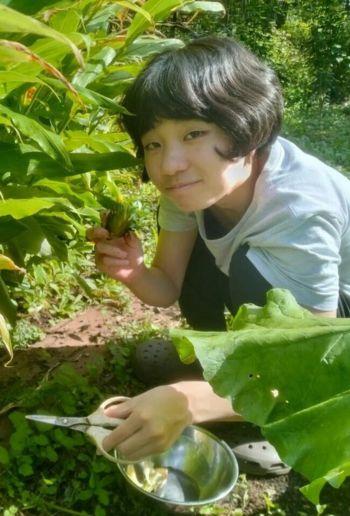
Kyoko Ishida
Doctoral Course Student at the Department of Integrated Biosciences
I am interested in the molecular mechanisms and evolution underlying sex- and species-specific traits, such as the color, shape, and behavior of insects. As an undergraduate, I belonged to an evolutionary genomics laboratory. My research focused on Lepidoptera, which biosynthesize defensive compounds against natural enemies, and I primarily used data analysis to investigate the evolutionary pathways of these mechanisms as well as sexual differences in their biosynthetic capabilities.
Driven by a desire to acquire various research methods beyond data analysis, I decided to join my current laboratory. Currently, I am studying sex-determining genes in the spongy moth (Lymantria dispar), incorporating diverse approaches including molecular experiments, genomic analysis, and field surveys. I focus on sex-determining genes, which govern the universal biological trait of sex. My goal is to clarify how their diversity functions in the wild.
I believe the true appeal of this Graduate School lies in the opportunity to collaborate and discuss ideas with researchers from diverse backgrounds, transcending the boundaries of laboratories and departments. If you are interested in any of our fields or labs, I highly encourage you to visit the Kashiwa Campus.
Expanding the Possibilities of Nature Experiences from the Real to the Virtual
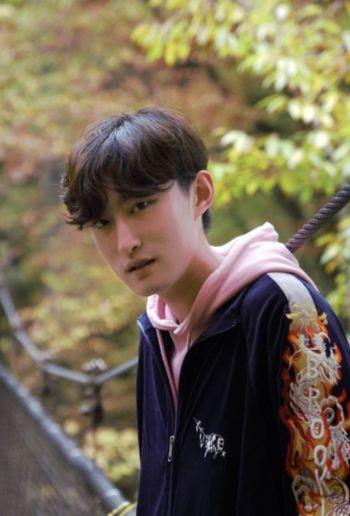
Yuming Han
Doctoral Course Student at the Department of Natural Environmental Studies
During my undergraduate studies, I learned about landscape design and green infrastructure, and in my master’s program, I conducted research in landscape studies within the field of civil engineering. Throughout my academic journey, I have been interested in the relationship between people and natural environments, especially in the cultural aspects of ecosystem services.
One of the most attractive features of the Graduate School of Frontier Sciences is its interdisciplinary environment. Rather than being limited to a single specialty, students are encouraged to pursue their own interests while flexibly incorporating perspectives and knowledge from other fields. I find this approach both stimulating and enjoyable. Currently, I belong to Professor Kazuhiko Nakamura’s laboratory, where I am involved in the “Cyber Forest” project, which has continued for more than 30 years. Through this project, I encountered a new research perspective that combines nature experiences with information and communication technologies, which greatly inspired me.
Building on my previous studies of cultural ecosystem services, I am now exploring the possibilities of virtual nature experiences by integrating perspectives from information technology. I strongly feel both the challenges and the excitement that come from expanding the possibilities of research through interdisciplinary collaboration. For students who wish to value their own interests and ideas while pursuing original and challenging research, I believe the Graduate School of Frontier Sciences offers a truly inspiring environment.
Deciphering Ocean Extremes
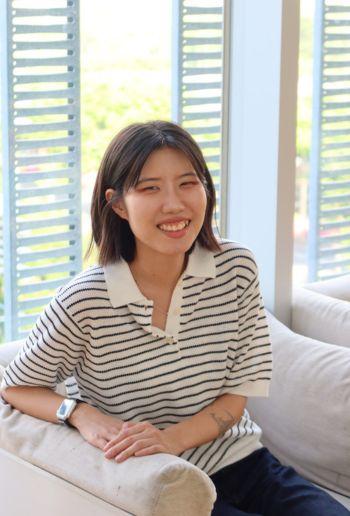
Chung Min
Master's Course Student at the Department of Ocean Technology, Policy, and Environment
I completed my undergraduate studies in Environmental Sciences at the University of Tokyo’s Faculty of Arts and Sciences, where I developed an interest in understanding complex natural systems. Currently, my research focuses on extreme ocean events associated with tropical cyclones, such as extreme waves and coastal hazards. By combining statistical modeling with physical insight, I aim to better understand how these rare but impactful events develop and how their risks can be estimated more reliably.
Because my research lies between multiple areas such as physical oceanography, climate science, and statistics, I was looking for a graduate program that would allow me to move flexibly across disciplines. The Graduate School of Frontier Sciences appealed to me because of its openness toward problem-driven research and its encouragement of independent thinking. One of the aspects I value most is the freedom to connect ideas and methods that would normally belong to separate academic fields.
Looking ahead, I hope to continue this line of research and deepen my understanding of both the methods and underlying mechanisms of extreme ocean phenomena by pursuing a PhD. For students considering GSFS, I think it is an especially rewarding environment for those who are curious, self-motivated, and interested in exploring problems that do not fit neatly into a single field.