
Frontier Sciences Initiative
Since its establishment in 1998, the Graduate School of Frontier Sciences at the University of Tokyo has been dedicated to creating new academic disciplines. As a result of these efforts, numerous interdisciplinary research activities have been advanced, leading to the establishment of three research centers, as well as industry–academia collaborative chairs and endowed chairs.
To further invigorate these research activities, we are pleased to announce the launch of a new research organization, the “Frontier Sciences Initiative,” designed to pioneer emerging fields.
The Frontier Sciences Initiative consists of research groups formed by multiple faculty members within the Graduate School. These groups engage in initiatives expected to address societal challenges, create new value, and advance research fields. Some groups have already conducted research for a certain period and aim to develop into formal centers in the future, while others are newly established or in the process of being launched. The Graduate School will actively support and promote these initiatives.
In fiscal year 2025, six groups have been selected. From fiscal year 2026 onward, new groups will continue to be added, and each group will progress to the next stage of development according to its achievements. The initiative will be updated on a multi-year cycle.
Smart Health Initiative
HISATSUNE Tatsuhiro, Assoc. Prof.

Architecting the Future of Longevity
Living well for a century is no longer a dream—it is a deliberate design. The Smart Health Initiative stands at the forefront of this transformation. Through our flagship "Smart Health School," we empower a new generation of visionary leaders to dismantle traditional silos using cutting-edge digital ecosystems and Generative AI. We are the bridge where human expertise meets machine intelligence. By synergizing these forces, we catalyze the rapid integration of AI-driven breakthroughs into the fabric of society. Our mission is clear: to accelerate impact and engineer a radiant, resilient future of health for all.
Field-Oriented Initiative for Environmental Ecology Research
MATSUNAGA Sachihiro, Prof. / NAGATA Shinji, Prof. / ISHIKAWA Asano, Prof.

Construction of an ecosystem platform
using outdoor mesocosms and artificial microcosms.
Development of original environmental ecology research utilizing the field environment of the Kashiwa Campus.
To establish a research platform that integrates information from molecular data to biological communities and ecosystems, and interprets biodiversity from a multilayered perspective, we will build an artificial ecosystem platform in the Kashiwa Campus field. This platform will enable the development of innovative research outcomes by integrating biological information across multiple organizational levels.
Research Initiative for Plasma Materials Science
ITO Tsuyohito, Assoc. Prof.

Research Initiative for Fundamental and Applied Plasma Materials Science
The Research Initiative for Plasma Materials Science is a research platform dedicated to advancing innovations in materials processing and establishing the scientific foundations of nonequilibrium process science. Built on advanced plasma control and state‑of‑the‑art diagnostic technologies, the Initiative serves as a bridge between fundamental understanding and practical applications. It also supports industry collaboration and fosters interdisciplinary research efforts.
Soft Device Science Initiative
TAKEYA Junichi, Prof.
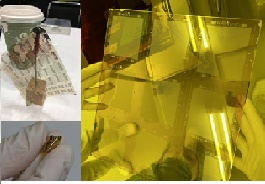
A 30 cm soft semiconductor wafer (right)
a patterned film for ICs (bottom left)
and a soft semiconductor chip (top left)
Self-Growing Soft Devices: Shaping the Future of Information and Energy Infrastructure
"Soft devices"—in which organic molecules spontaneously grow through self-assembly like living organisms to acquire scalable electronic and energy conversion functions—are emerging as a next-generation social infrastructure concept that offers low environmental impact, low cost, and capability of large-area scalability. This initiative leads to the functional expansion and social implementation of the soft devices.
Haptics Initiative
SHINODA Hiroyuki, Prof.

The University of Tokyo’s Project: Breaking Through the "Haptic Barrier"
Since its establishment as an academic field in the early 2000s, haptics has long been regarded as a niche area within science, engineering, and informatics. Today, however, we are witnessing a discontinuous shift in both technological seeds and market needs. The Haptics Initiative aims to strategically propel the field of haptics—which is now showing clear signs of growth—and powerfully promote the effective utilization of tactile sensations across a wide range of applications.
Vehicle System Initiative
YAMASAKI Yudai, Prof. / FUJIMOTO Hiroshi, Prof.
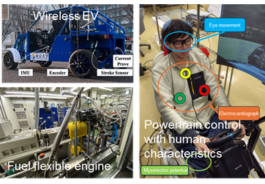
Powertrain systems harmonizing carbon neutrality with human desires
Beyond Decarbonization: Defining the New Era of Mobility through Advanced Carbon-Neutral Vehicle Systems
The Vehicle System Initiative pursues the achievement of carbon neutrality and the enhanced convenience and well-being of mobility that lie beyond. Beyond simply fulfilling our essential duty to reduce CO2 emissions, we aim to harmonize practical convenience with a deeply enriching mobility experience for everyone. By profoundly exploring the complex synergy between environmental performance and diverse human characteristics, we define next-generation vehicle systems tailored for real-world social implementation. This research drives our commitment to pioneering innovative technological frontiers that will ultimately reshape the future of sustainable transportation for our global society.
*The contents of this page were developed based on a machine translation.