
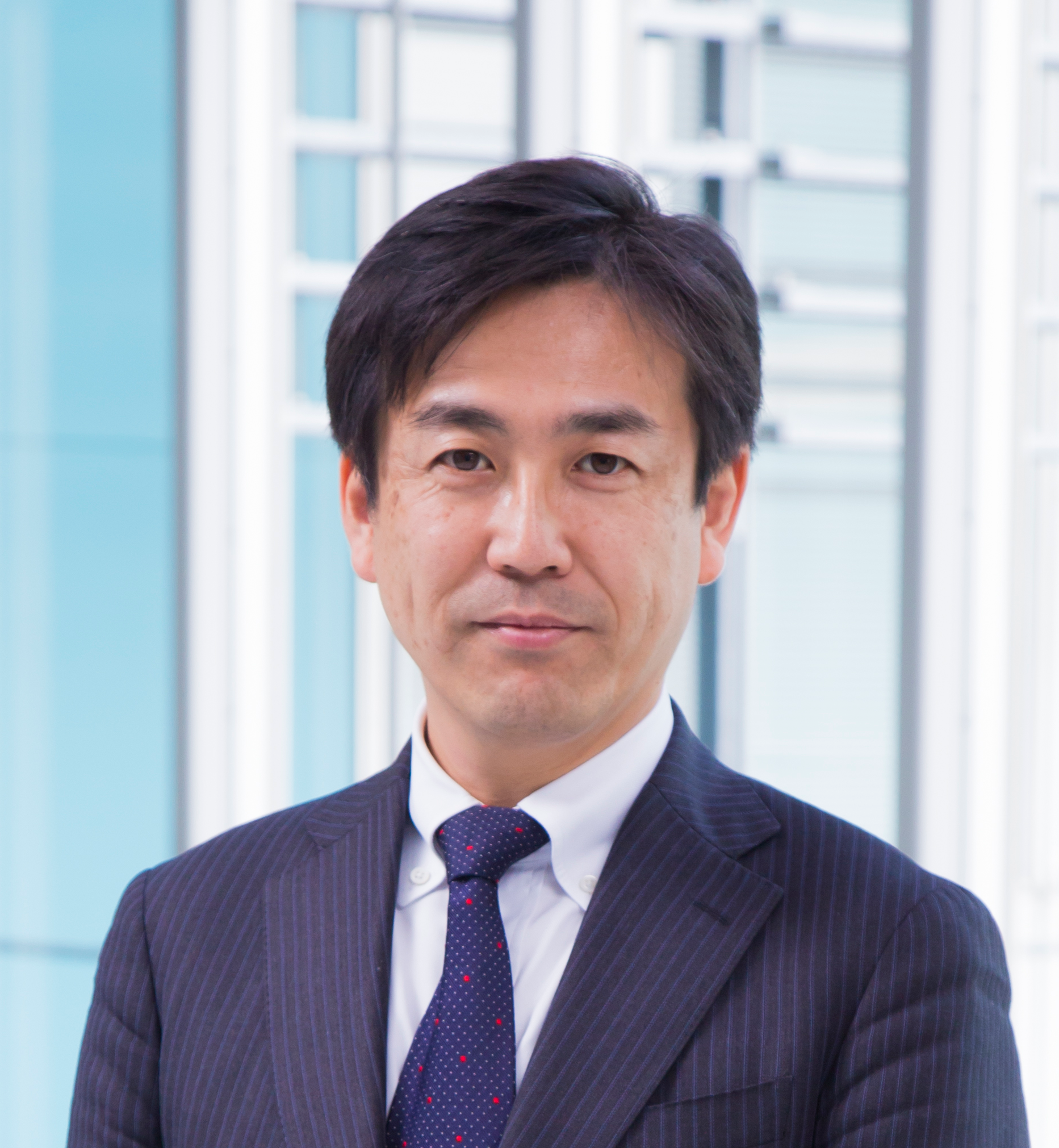
WARISAWA Shin'ichi
(Professor/Division of Environmental Studies)
Department of Human and Engineered Environmental Studies/Nanomechanical sensors, Nanostructure fabrication, Wearable healthcare systems
Career Summary
1989 March: Graduated from Faculty of Engineering (University of Tokyo)
1994 March: Received Ph.D. in Engineering from University of Tokyo
1994 April: Assistant Professor (Precision and Intelligence Laboratory, Tokyo Institute of Technology)
2000 April: Lecturer (School of Engineering, University of Tokyo)
2003 August: Associate Professor (School of Engineering, University of Tokyo)
2010 April-2011 March: Visiting Scholar (Massachusetts Institute of Technology)
2012 April: Associate Professor (Graduate School of Frontier Sciences, University of Tokyo)
2015 June: Professor (Graduate School of Frontier Sciences, University of Tokyo)
2019–2020: Assistant to the President
2020–2027: Specially Appointed Assistant to the President (in charge of promoting industry-academia collaboration and social engagement, and the Innovation Corridor)
2021–2023: Chair, Division of Environmental Studies, Graduate School of Frontier Sciences, The University of Tokyo
2023–2027: Associate Dean, Graduate School of Frontier Sciences, The University of Tokyo
Educational Activities
Graduate School: Human and Environment Informatics Wearable Sensing, Smart Sensing
Graduate School of Arts and Sciences: Technology and Sustainable Development, Foundations of Environmental Sciences II, Comparative Studies of the Normative Basis of Civil Society II
Faculty of Medicine, Integrated Health Sciences: Human and Environmental Engineering
Research Activities
We are exploring the creation of sensor devices based on innovative detection principles that target various types of information emitted by humans and the environment; sensing designs based on information processing technologies that extract higher-order information from sensor data; and models for promoting mental and physical health through human intervention.
One such innovative detection principle involves a single-gas sensor capable of detecting different gases simply by replacing the dataset. Specifically, using acetone in exhaled breath—a biomarker for diabetes—as an example, we demonstrated that by extracting appropriate features through deep learning applied to time-series resistance data obtained from a single-gas sensor hardware and exposure to acetone gas alone, it is possible to detect acetone present at ppm levels even when mixed with other gases.
We also focused on research aimed at estimating invisible human states—such as stress, concentration, and cognitive work productivity—using wearable devices and contactless sensors. In the estimation of chronic stress, we focused on improving both accuracy and interpretability. Our findings revealed that when integrating behavioral and physiological indicators, it is more effective to improve estimation accuracy by capturing the relationship between lower-order physiological regulatory processes and higher-order behavioral control—rather than solely focusing on the temporal structure of responses to cognitive and physical stress—rather than merely considering the temporal structure of responses to cognitive and physical stress. This framework provides rational guidelines for stress design, feature extraction, and the selection of evaluation metrics in future research on chronic stress estimation.
For estimating mental work productivity, we proposed a method that integrates cognitive modeling and biometric data: it treats factors causing performance fluctuations—which cannot be directly observed—as parameters of a computational cognitive model, and enables the prediction of these model parameters from biometric data based on the physical responses triggered by those factors. Furthermore, to facilitate the routine application of this method, we established a data collection platform that combines wearable devices with cognitive performance tests. We believe these efforts are of great significance in linking cognitive state estimation methods to practical applications.
Additionally, prompted by the question of whether sleep quality could be evaluated from the perspective of cognitive work productivity, we developed a method to estimate post-wake-up cognitive work productivity based on physiological data collected during sleep. We conducted this research in collaboration with an air conditioning equipment manufacturer, examined air conditioning control methods that enable high-quality sleep—which positively impacts cognitive work productivity—and used these findings to propose a sleep score that provides a tangible sense of sleep quality.
As part of our human intervention research, we focused on breaks taken during periods of increased stress or decreased cognitive work productivity. We advanced research to design and develop core technologies for providing high-quality breaks from the perspectives of inter-sensory interaction and a sense of self-agency. For example, research demonstrating that combining visual and auditory stimuli to indicate direction or temperature—even when the actual airflow direction remains constant—can alter perceptions of airflow direction and temperature could serve as a foundational technology for creating rest environments with pleasant breezes. Research showing that a sense of vocal agency—which also contributes to stress reduction—can be created through auditory and vibrational stimuli suggests that the positive physical and mental effects associated with vocalization can be expected even in constrained rest environments.
Literature
Kazuki Bessho, Shin'ichi Warisawa and Reo Kometani: "Optical force measurement method by a nanomechanical resonant device with electrostatic force coupling", Micro and Nano Engineering, vol. 29, pp. 100341, 2025
Ryota Nitto, Yuki Ban, Rui Fukui and Shin'ichi Warisawa: "Gradual Increases in Sugar Concentration Enhance Total Perceived Sweetness in Individuals Prone to Sweetness Habituation", Frontiers in Psychology, vol. 16, 1561107, 2025
Hiroto Hasegawa, Shin’ichi Warisawa and Rui Fukui: "Statistical Analysis of Daily Life Data Acquired by a Sensor-embedded Plushie Device for Understanding the Behavior of the Terrible Twos", Journal of the Robotics Society of Japan, vol. 43, no.3, pp. 311-318, 2025
Kai Guo, Juro Hosoi, Yuki Shimomura, Yuki Ban and Shin’ichi Warisawa: "Visual Presentation Method for Paranormal Phenomena Through Binocular Rivalry Induced by Dichoptic Color Differences", IEEE Transactions on Visualization and Computer Graphics, vol. 31, no. 5, pp. 3296-3305, 2025
Sogo Amagai, Shin’ichi Warisawa and Rui Fukui: "Efficient Training Data Collection for Distance Sensor Arrays Through Data Correction and Augmentation Approaches", IEEE Robotics and Automation Letters, vol. 10, no. 6, pp. 6392-6399, 2025
Mutoh N, Moriya M, Xu C, Kato K, Arai S, Iwabuchi N, Tanaka M, Jinghua Y, Itamura R, Sakatani K, Warisawa S.: Bifidobacterium breve M-16V regulates the autonomic nervous system via the intestinal environment: A double-blind, placebo-controlled study. Behav Brain Res. 2024
Juro Hosoi, Du jin, Yuki Ban and Shin’chi Warisawa: "Voluminous Fur Stroking Experience Through Interactive Visuo-Haptic Model in Virtual Reality", IEEE Transactions on Haptics, vol. 18, no. 1, pp. 232-243, 2024
Kazuki Shimamura, Yuki Shimomura, Yuki Ban, Yusuke Ujitoko and Shin’ichi Warisawa: "Effect of Virtual Object Material on the Pseudo-Haptic Weight", IEEE Access, vol. 12, pp. 183143-183152, 2024
Kenta Ito, Yuki Ban and Shin’chi Warisawa: "Influence of habituation on pseudo-haptic weight perception of virtual objects", Frontiers in Virtual Reality, 5:1442829, 2024
Xuesi Li, Xianyin Hu, Ang Li, Reo Kometani, Ichiro Yamada, Kazuyuki Sashida, Makiko Noma, Katsufumi Nakanishi, Toshiyuki Takemori, Kenichi Maehara, Katsuya Ikeda, Kenichi Yoshida, Feng Lin, Yoshio Mita and Shin'ichi Warisawa: "An Olfactory Figure-ground Segregation: The Resistance Fluctuation Analysis of Acetone Gas for Acetone/Random Gas Mixtures Recognition", Sensors and Actuators A: Physical, vol. 376, pp. 115627, 2024
Kazuki Bessho, Shin’ichi Warisawa and Reo Kometani: "Evaluation of highly sensitive vibration states of nanomechanical resonators in liquid using a convolutional neural network", Micro and Nano Engineering, vol. 24, pp. 100282, 2024
Xianyin Hu, Yuki Ban and Shin’ichi Warisawa: "Enhancing User Engagement in DailyExp: A Tool for Collecting Cognitive Performance and Physiological Data with Engaging Behavioral Design", International Journal on Advances in Life Sciences, vol. 16, no. 1 & 2, pp. 1-10, 2024
Yuki Shimomura, Yuki Ban and Shin’ichi Warisawa: "The Effect of Laryngeal Vibratory Stimuli and User’s Vocal Style on Sense of Vocal Agency", IEEE Access, vol. 12, pp. 53598-53609, 2024
Naoki Tateyama, Ryota Yokomura, Yuki Ban, Shin’ichi Warisawa and Rui Fukui: "Planning the Future in a Longer Perspective: Effects of a One-week Forecast of Mental Health", Proceedings of the ACM on Interactive, Mobile, Wearable and Ubiquitous Technologies, vol. 8, no. 1, pp. 20, 2024
Ryota Yokomura, Masataka Goto, Takehito Yoshida, Shin’ichi Warisawa, Toshihide Hanari and Kuniaki Kawabata, Rui Fukui: "Rail DRAGON: Long-Reach Bendable Modularized Rail Structure for Constant Observation Inside PCV", IEEE Robotics and Automation Letters, vol. 9, no. 4, pp. 3275-3282, 2024
Yuki Ban, Masahiro Inazawa, Chisato Kato and Shin’ichi Warisawa: "VR communication simulation with scripted dialog elicits HPA axis stress", Frontiers in Virtual Reality, 4:1302720, 2024
Rei Ezaka, Takehito Yoshida, Yudai Yamada, Shin’ichi Warisawa and Rui Fukui: "Reliability Improvement of a Crawler-Type Ceiling Mobile Robot in Starting, Accelerating, and Traveling Phase at High Speed", Journal of Robotics and Mechatronics, vol.35, no.6, pp. 1551-1561, 2023
Sogo Amagai, Yuji Fukuoka, Takafumi Fujii, Yushi Matsuzaki, Hiroaki Hosozawa, Takanori Ikegami, Shin’ichi Warisawa and Rui Fukui: "Remote operation system for novice tractor drivers for situations where automatic driving is difficult", Journal of Field Robotics, vol. 40, pp. 1346-1362, 2023
Juro Hosoi, Yuki Ban, Kenichi Ito and Shin’ichi Warisawa: "Pseudo-Wind Perception Induced by Cross-Modal Reproduction of Thermal, Vibrotactile, Visual, and Auditory Stimuli", IEEE Access, vol. 11, pp. 4781-4793, 2023
Xuesi Li, Xianyin Hu, Ang Li, Reo Kometani, Ichiro Yamada, Kazuyuki Sashida, Makiko Noma, Katsufumi Nakanishi, Yusuke Fukuda, Toshiyuki Takemori, Kenichi Maehara, Katsuya Ikeda, Kenichi Yoshida, Yoshio Mita and Shin’ichi Warisawa: "Identification of binary gases’ mixtures from time-series resistance fluctuations: A sensitivity-controllable SnO2 gas sensor-based approach using 1D-CNN", Sensors and Actuators A: Physical, vol. 349, pp. 114070-1-11, 2023
Sakatani K, Oyama K, Hu L, Warisawa S.: Estimation of Human Cerebral Atrophy Based on Systemic Metabolic Status Using Machine Learning. Front Neurol. 2022 May 2;13:869915
Goichi Hagiwara, Kayoko Kurita, Satori Hachisuka, Shin'ichi Warisawa, Takehiro Iwatsuki, Fumio Mizuochi, and Mariya Yukhymenko-Lescroart, “A development and preliminary validation of the brief version of the Japanese Academic and Athletic Identity Scale”, International Journal of Sports Science & Coaching, 2022
Goichi Hagiwara, Kayoko Kurita, Shin'ichi Warisawa, Satori Hachisuka, Jim Ueda, Kensuke Ehara, Katsuhiko Ishikawa, Kosei Inoue, Daisuke Akiyama, Masakatsu Nakada and Masafumi Fujii, “Competencies That Japanese Collegiate Sports Coaches Require for Dual-Career Support for Student Athletes”, International Journal of Environmental Research and Public Health 2022, 19(18), 11503, 2022
Kohei Tsumune, Shin’ichi Warisawa and Reo Kometani: "Highly sensitive vibration measurement method of nanomechanical resonator using convolutional neural network", Japanese Journal of Applied Physics, vol. 64, pp. SD1038-1-5, 2022
Ryota Yokomura, Shin’ichi Warisawa and Rui Fukui: "3-Dimensional construction of the modularized rail structure in various posture conditions", Advanced Robotics, vol. 36, no. 24, pp. 1351-1364, 2022
Sogo Amagai, Qiwei Ye, Yuji Fukuoka, Shin’ichi Warisawa and Rui Fukui: "Clustering of distance sensors to transfer training data for relative position and orientation measurement devices", ROBOMECH Journal, vol. 9, no. 1, pp. 20, 2022
Tatsuro Mitani, Shunsuke Okishiba, Naoki Tateyama, Koshi Yamanojo, Shin’ichi Warisawa and Rui Fukui: "A Wearable Multi-Joint Wrist Contour Measuring Device for Hand Shape Recognition", IEEE Robotics and Automation Letters, vol. 7, no. 3, pp. 8331-8338, 2022
Tatsuro Mitani, Shunsuke Okishiba, Naoki Tateyama, Koshi Yamanojo, Shin’ichi Warisawa and Rui Fukui: "A Wearable Multi-Joint Wrist Contour Measuring Device for Hand Shape Recognition", IEEE Robotics and Automation Letters, vol. 7, no. 3, pp. 8331-8338, 2022
Motoki Sato, Yuta Tsunano, Katsuya Sano, Shin’ichi Warisawa, Masanori Aizawa, Kiwa Nishimura and Rui Fukui: "Evaluation of excavation motion sequence for hydraulic excavators based on extraction of excavation style and phase", Journal of Field Robotics, vol. 39, 2022
Naoki Tateyama, Rui Fukui and Shin’ichi Warisawa: "Mood Prediction Based on Calendar Events Using Multitask Learning", IEEE Access, vol. 10, pp. 79747-79759, 2022
Kaoru Sakatani, Katsunori Oyama, Lizhen Hu and Shin’ichi Warisawa: "Estimation of Human Cerebral Atrophy Based on Systemic Metabolic Status Using Machine Learning", Frontiers in Neurology, vol. 13, pp. 869915, 2022
Yuki Ban, Koichi Ota, Rui Fukui and Shin’ichi Warisawa: "Multiplexed lighting system using time-division multiplexing", Journal of Ambient Intelligence and Humanized Computing, vol. 14, pp. 13195-13209, 2022
Yuki Ban, Hiroyuki Karasawa, Rui Fukui and Shin’ichi Warisawa: "Development of a Cushion-shaped Device to Induce Respiratory Rhythm and Depth for Enhanced Relaxation and Improved Cognition", Frontiers in Computer Science, vol. 4, pp. 33, 2022
Kenta Ito, Yuki Ban and Shin’ichi Warisawa: "Coldness presentation depending on motion to enhance the sense of presence in a virtual underwater experience", IEEE Access, vol. 10, pp. 23463-23476, 2022
Mizuki Ishiguro, Rui Fukui, Shin’ichi Warisawa, Naoyasu Narita and Hironobu Miyoshi: "Laser Cutting Defect Recognition Using Conversion of Processing Light Information into Spectrogram Images – Spectroscopic Measurements in Multiple Work Surface Conditions and Extraction of Spectral Data Features Based on Processing Principle –", International Journal of Automation Technology, vol. 15, no. 5, pp. 728-739, 2021
Xianyin Hu, Shinji Nakatsuru, Yuki Ban, Rui Fukui and Shin’ichi Warisawa: "A Physiology-Based Approach for Estimation of Mental Fatigue Levels With Both High Time Resolution and High Level of Granularity", Informatics in Medicine Unlocked, vol. 24, 2021
Other Activities
The Japan Society of Mechanical Engineers, The Japan Society of Precision Engineering, The Japan Society for Abrasive Technology, The Japan Society of Applied Physics, The Robotics Society of Japan, The Water Jetting Technology Society of Japan, The Visualization Society of Japan, Japan Society of Physical Exercise and Sport Science
Future Plan
With a focus on humans, man-made objects, and nature, we are advancing the development of sensor devices based on new detection principles, biometric sensing technologies, and sensing systems. Through our research and education, we aim to promote physical and mental well-being by creating safe, secure, and comfortable living environments.
Messages to Students
I believe that enjoying the research process and staying highly motivated are essential to everything we do.