My research focuses on the atmosphere of Venus.
Ever since I was little, I had a vague interest in Earth's weather—so much so that I used to write "I hope I can become a weather forecaster" on my Tanabata wish strips. When I was in junior high school, I even visited a professor at a local university to ask about whether global warming was really happening. I still vividly remember him handing me a cooler box with Antarctic ice on my way home. That said, I wasn't particularly fascinated by Venus itself as a child. My closest connection to Venus back then was probably that Sailor Venus was my favorite character in Sailor Moon (laughs).
I went on to study in the Faculty of Science at university. My department had not only professors specializing in Earth's meteorology but also many who studied the meteorology of Venus. Through coursework and research, I gradually became drawn to the excitement of viewing Earth's weather from the broader perspective of planetary meteorology. Venus is often called "Earth's twin" and is an important celestial body for thinking about the future of our own planet. Despite this, there is still far more about Venus's meteorology that remains unknown compared to Earth's, and I found this abundance of mystery deeply appealing.
Currently, I am working to contribute to the understanding of mesoscale meteorology on Venus by combining radio occultation observations—a remote sensing technique with the highest altitude resolution—with "Venus SCALE-GM," the world's highest-resolution Venus atmospheric dynamics simulation, approaching the subject from both observational and theoretical perspectives.
What I enjoy most about research life is the moment when something I didn't understand gradually becomes clear. At the same time, the more I learn, the more new questions arise. I believe this "never getting bored" is what makes research so fascinating. I have also been greatly influenced by my advisor's attitude of finding it interesting even when results don't turn out as expected—"That's interesting in its own way." Additionally, participating in international conferences and workshops has been an invaluable experience. Looking back on my first year of the doctoral program, I had the opportunity to visit three countries: Beijing, Helsinki, and Lisbon. Presenting my research to the outside world and hearing directly from various researchers broadened my horizons.
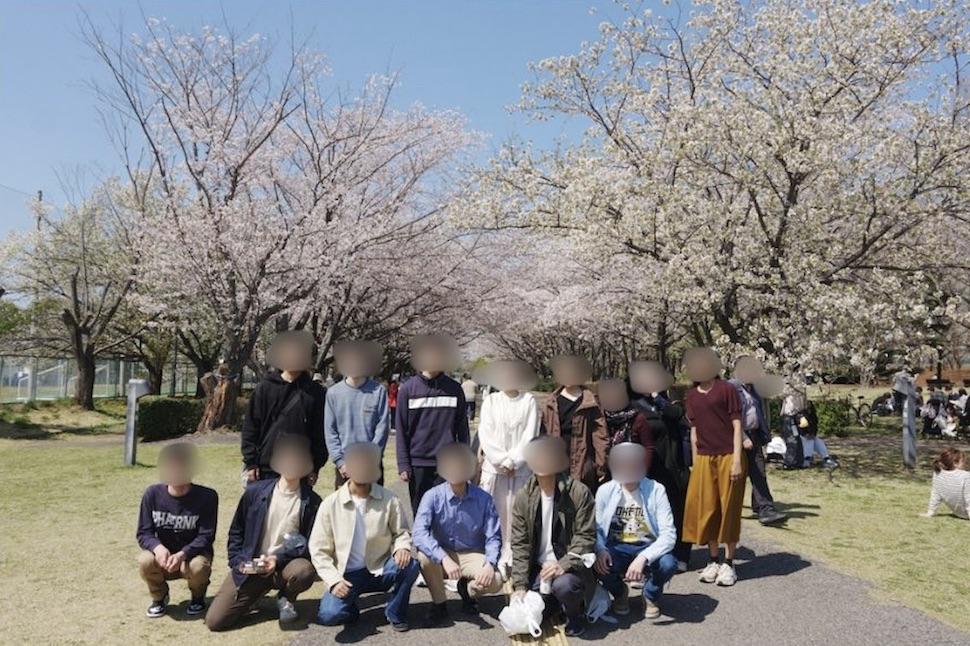
There is a park right in front of the Kashiwa Campus, and the rows of cherry trees are beautiful in spring. At the start of the new academic year, it has become a tradition for our lab members and professors to go cherry blossom viewing together in that park. I feel that having these casual moments of interaction is one of the charms of lab life.
Ever since I was little, I had a vague interest in Earth's weather—so much so that I used to write "I hope I can become a weather forecaster" on my Tanabata wish strips. When I was in junior high school, I even visited a professor at a local university to ask about whether global warming was really happening. I still vividly remember him handing me a cooler box with Antarctic ice on my way home. That said, I wasn't particularly fascinated by Venus itself as a child. My closest connection to Venus back then was probably that Sailor Venus was my favorite character in Sailor Moon (laughs).
I went on to study in the Faculty of Science at university. My department had not only professors specializing in Earth's meteorology but also many who studied the meteorology of Venus. Through coursework and research, I gradually became drawn to the excitement of viewing Earth's weather from the broader perspective of planetary meteorology. Venus is often called "Earth's twin" and is an important celestial body for thinking about the future of our own planet. Despite this, there is still far more about Venus's meteorology that remains unknown compared to Earth's, and I found this abundance of mystery deeply appealing.
Currently, I am working to contribute to the understanding of mesoscale meteorology on Venus by combining radio occultation observations—a remote sensing technique with the highest altitude resolution—with "Venus SCALE-GM," the world's highest-resolution Venus atmospheric dynamics simulation, approaching the subject from both observational and theoretical perspectives.
What I enjoy most about research life is the moment when something I didn't understand gradually becomes clear. At the same time, the more I learn, the more new questions arise. I believe this "never getting bored" is what makes research so fascinating. I have also been greatly influenced by my advisor's attitude of finding it interesting even when results don't turn out as expected—"That's interesting in its own way." Additionally, participating in international conferences and workshops has been an invaluable experience. Looking back on my first year of the doctoral program, I had the opportunity to visit three countries: Beijing, Helsinki, and Lisbon. Presenting my research to the outside world and hearing directly from various researchers broadened my horizons.
There is a park right in front of the Kashiwa Campus, and the rows of cherry trees are beautiful in spring. At the start of the new academic year, it has become a tradition for our lab members and professors to go cherry blossom viewing together in that park. I feel that having these casual moments of interaction is one of the charms of lab life.